Circling Lucy in Prague
Bowing to ancient bone fragments in a hushed room

In a darkened room, people are leaning over a glass case, peering down for a chance to meet an ancestor. Light falls from tiny spotlights, hitting only where needed: on bone fragments resting on a black background, and on the life-like reconstruction posed above the skeleton. This is Lucy.
She lies recessed in a large, black, table-like case just below hip height, visible through a single panel that requires you lean forward to gaze down at her from above— forcing every visitor into a modest bow. The label delivers the facts: Australopithecus afarensis, 3.2 million years old, discovered at Hadar in 1974, but the bones speak too. They are tan, with teeth-stained dark, somehow embodying both the appearance of fragility and durability.

The museum imposes a sort of choreography, with ropes maintaining flow and Lucy’s small size meaning only four people or so can crowd around her at once. The human current moves clockwise around the large case, pausing first before her, then making their way to the other star: the A. afarensis child known as Selam (sometimes called Lucy’s Baby). A guard stands close by, watching for hands that might lean on the case or stray toward the glass. The room holds few people — two dozen at most — and those inside whisper like they’re in church.
Yesterday, on a relatively quiet Monday morning, I circled the exhibit three times. On the third pass, the security guard smiled at me and raised three fingers, chuckling at my laps. Each pass revealed something overlooked. First: the angles of that lower jaw are striking. Second: Selam’s tiny collarbones seem impossibly delicate; it’s hard to believe they were preserved for over three million years. Third: the display case itself is carved into the shape of Ethiopia, complete with etched waterways. Lucy belongs to a specific place, even if she has become more mobile in her afterlife as a celebrity.

Around me, visitors murmur. A young man repeatedly sounds out “aus-tra-lo-pith-e-cus” under his breath, trying to lodge the word in his memory. A second-grader waves at Lucy’s raised arm in the life-like reconstruction towering over her bones. Adults linger longer over the fossils themselves, while children are drawn to the reconstructions. A woman tells me she was in high school in 1974, the year Lucy was found. For her, meeting Lucy like this was a once-in-a-lifetime chance.
It’s quiet in the room, almost reverent, until a ringtone interrupts. Quickly silenced, the room resumes its hush; the only sound louder than a whisper is the chatter echoing from the hall and nearby rooms. The sole color in the display is the green leaves that the reconstructed Lucy eats. People look down at the fragments of bone, then up at her sculpted, reimagined face, then down again.
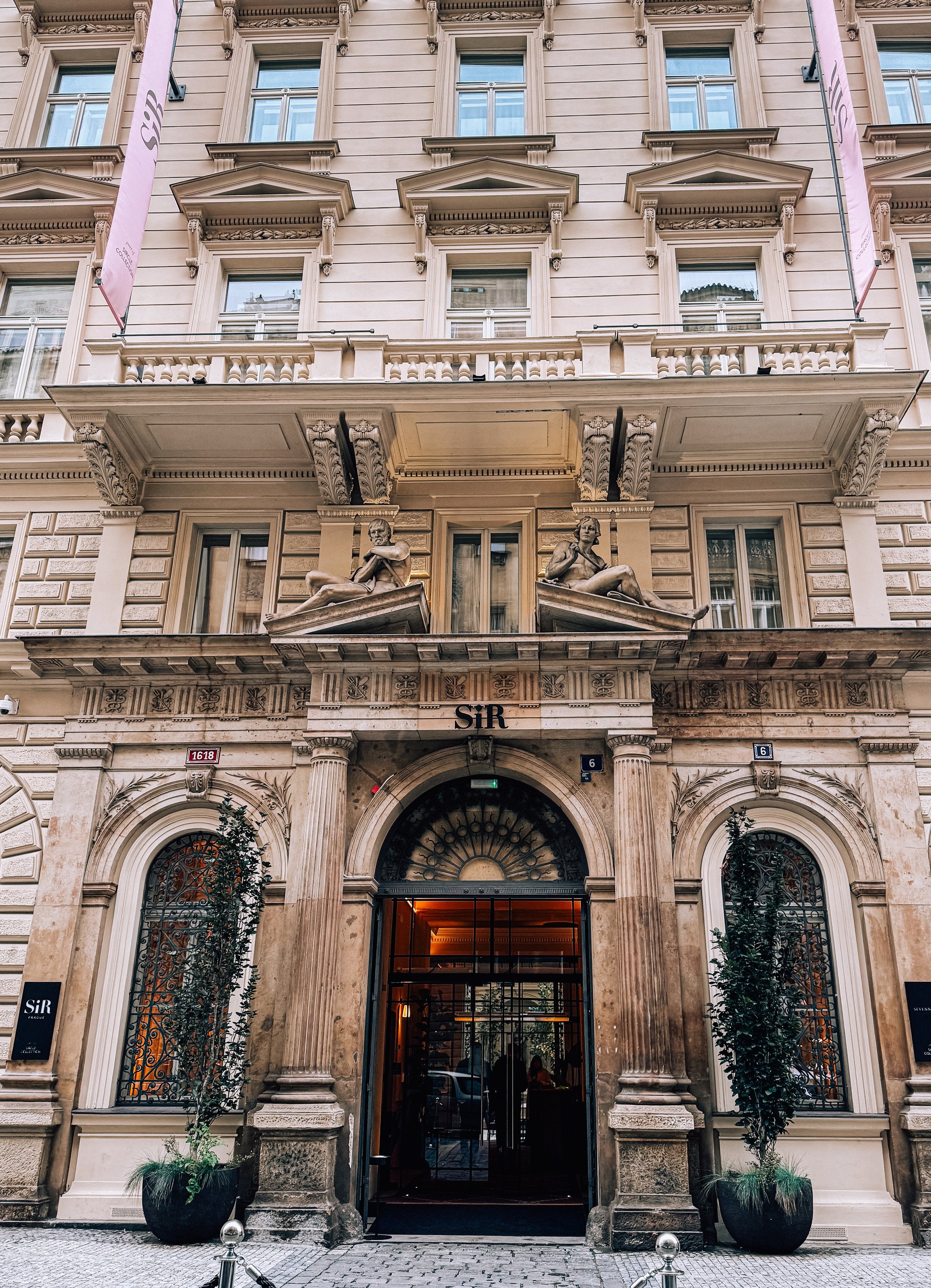
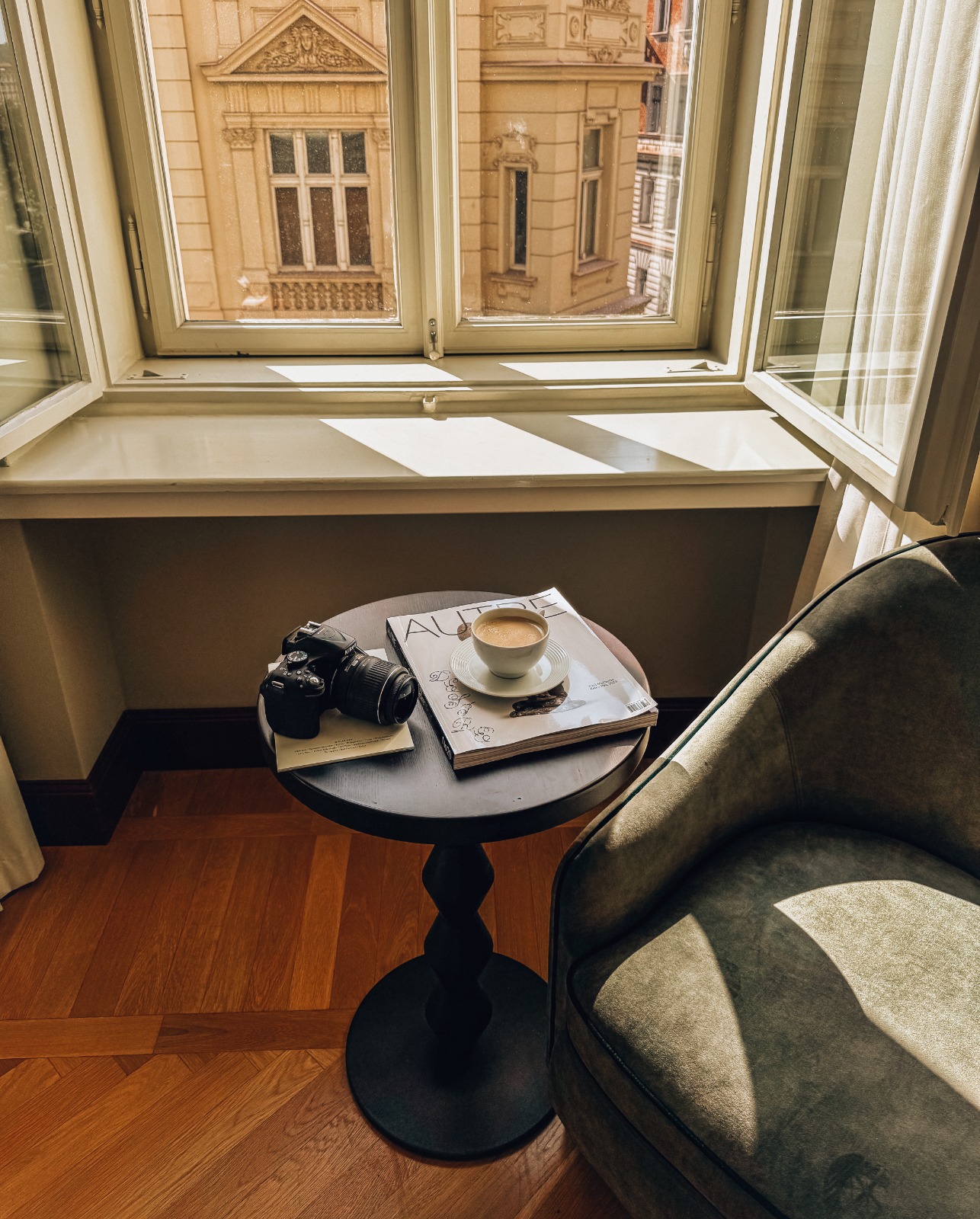
I’ll return today. Each visit to see her feels like paying respects, but also like taking notes on a conversation that is ongoing between the present and the past. I’m staying just a few minutes’ walk away at Sir Prague Hotel. It’s become the perfect base—close enough that I can return again and again, with the hotel staff cheering on my pilgrimage. I’m not the first guest here to have come to the city to see Lucy, and hopefully I won’t be the last.
If you’d like to support my reporting on Lucy in Prague, you can buy me a coffee.